

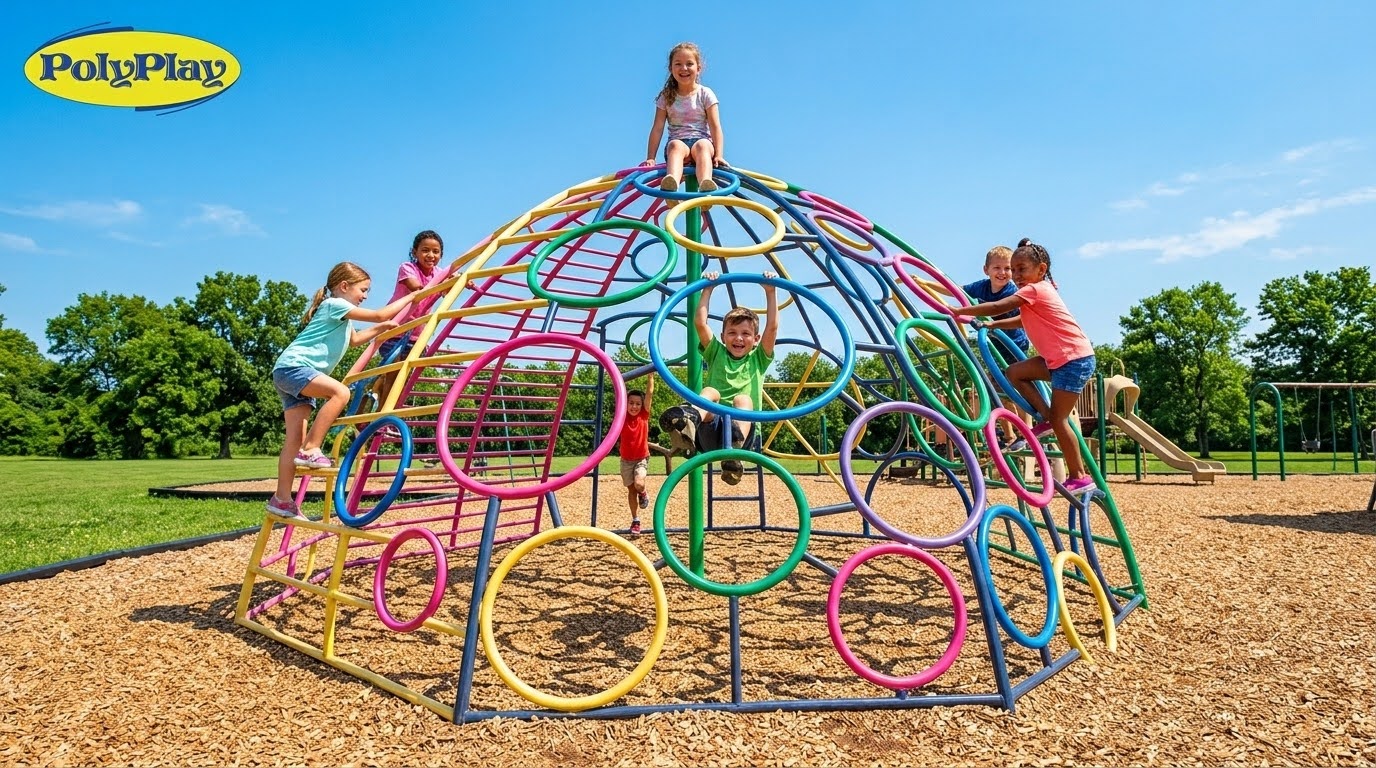
Ask any parent shopping for residential playground equipment Nairobi families are considering, and swings tend to come up first, slides second. A dome climber for kids rarely makes the initial shortlist, which is a shame, because it’s often the piece that gets used the most once it’s actually installed.
There’s a reason for that. A slide has one route: up the ladder, down the chute, repeat. A dome climber doesn’t work like that. Kids climb it from any angle, hang upside down from the top bars, sit inside it like a den, race each other around the outside edge, and generally invent about six different games out of one structure. Watch a compound with a dome installed for more than twenty minutes, and you will see what I mean.
Domes have a genuinely small footprint relative to how much play value they pack in. Unlike a kids’ play station with slide and swing, which needs clear fall space in front of the slide and behind the swing, a dome climber’s play zone is essentially just its own circumference plus a safety margin. That makes it a strong option for Nairobi compounds where garden space is at a premium but parents still want something more engaging than a single static piece.
The obvious parental worry with any climbing structure is height and falls. A dome climber’s structure actually works in its favour here, since children are almost always gripping the frame with both hands rather than balancing freely the way they might on a see-saw or a narrow beam. That said, the flooring underneath matters enormously. A dome sitting on bare compacted soil or concrete is a different risk profile entirely from one sitting on proper impact-absorbing surfacing, and we’d never recommend skipping that part of the budget to save on the structure itself.
A dome climber pairs naturally with a wavy slide with ladder and attached baby swing, since the two pieces serve different age groups and different play styles within the same footprint. Older children gravitate to the dome, younger siblings use the slide and swing combination, and both can be supervised from one spot in the garden or compound.
Steel gauge and weld quality decide how a dome climber ages. A cheaply welded dome develops rattle and flex within a season or two, particularly once several children are climbing it at once, which is the normal use case rather than the exception. Powder coating over galvanised steel is worth insisting on, since bare or poorly coated steel corrodes noticeably faster once Nairobi’s rainy seasons get to it.
One thing worth flagging honestly: dome climbers suit a fairly wide age range, roughly three through ten, which is unusual for a single piece of equipment. That’s partly why they work so well in mixed-age settings like family compounds or church nurseries, where a two-year age gap between siblings or cousins would otherwise mean two separate pieces of equipment competing for the same patch of garden.
If you’re building out residential playground equipment Nairobi gardens can realistically fit, don’t treat a dome climber for kids as an optional extra tacked onto a slide and swing order. It’s frequently the piece that earns its keep the longest, partly because there’s no single “correct” way to play on it, and partly because well-built steel domes simply last. Get the flooring right, get the weld quality right, and a dome climber for kids will outlive most of the other equipment around it.