
Walk into most hardware stores or scroll through enough WhatsApp catalogue groups, and you’ll find playground equipment at prices that seem reasonable. It looks colourful in the photo. The dimensions seem fine. The quote arrives quickly.
Then it gets installed. A year later, the frame is rusting at the joints, the slide has stress cracks running along the edges, and the school is back to square one—except now they’ve spent money twice.
Commercial playground equipment is not the same category as a plastic swing set for a back garden. It’s engineered for heavy, repeated use by large numbers of children across years of continuous exposure to sun, rain, and dust. In Kenya’s climate, that engineering requirement is even more demanding than it is in the markets where most catalogue equipment was originally designed.
The difference shows up in the steel, the plastics, and the joints — not in how the equipment photographs.
Commercial multi-tower playground systems use thick-wall steel posts, hot-dip galvanised or powder-coated to resist the corrosion that Kenya’s humidity and seasonal rain accelerate. Consumer-grade alternatives use thinner profiles with a painted finish that begins to break down within eighteen months of outdoor exposure.
The plastic components tell the same story. Commercial-grade decking, slides, and panels are moulded from UV-stabilised HDPE. Under direct equatorial sun, non-stabilised plastics lose colour, become brittle, and eventually crack under a child’s weight. That’s not a maintenance issue — it’s a structural failure waiting to happen.
Joints and fixings are where installations most commonly fail. Commercial equipment uses stainless or galvanised fasteners throughout. Budget equipment uses standard zinc-plated bolts that corrode from the inside of the frame outward, often invisibly until the structure fails a load test.
Early childhood play equipment for Kenya’s nurseries and lower primary schools has specific requirements that a generic structure won’t meet. Platform heights, slide gradients, step dimensions, and handrail positioning all change depending on whether the intended users are three or eight years old.
A toddler-appropriate structure sits at low platform heights with closed steps and short slide runs. A structure for older primary children needs more challenge — climbing panels, higher traverses, and overhead elements. Installing the wrong structure for the age group in a space isn’t just a poor experience for the children. It creates genuine risk.
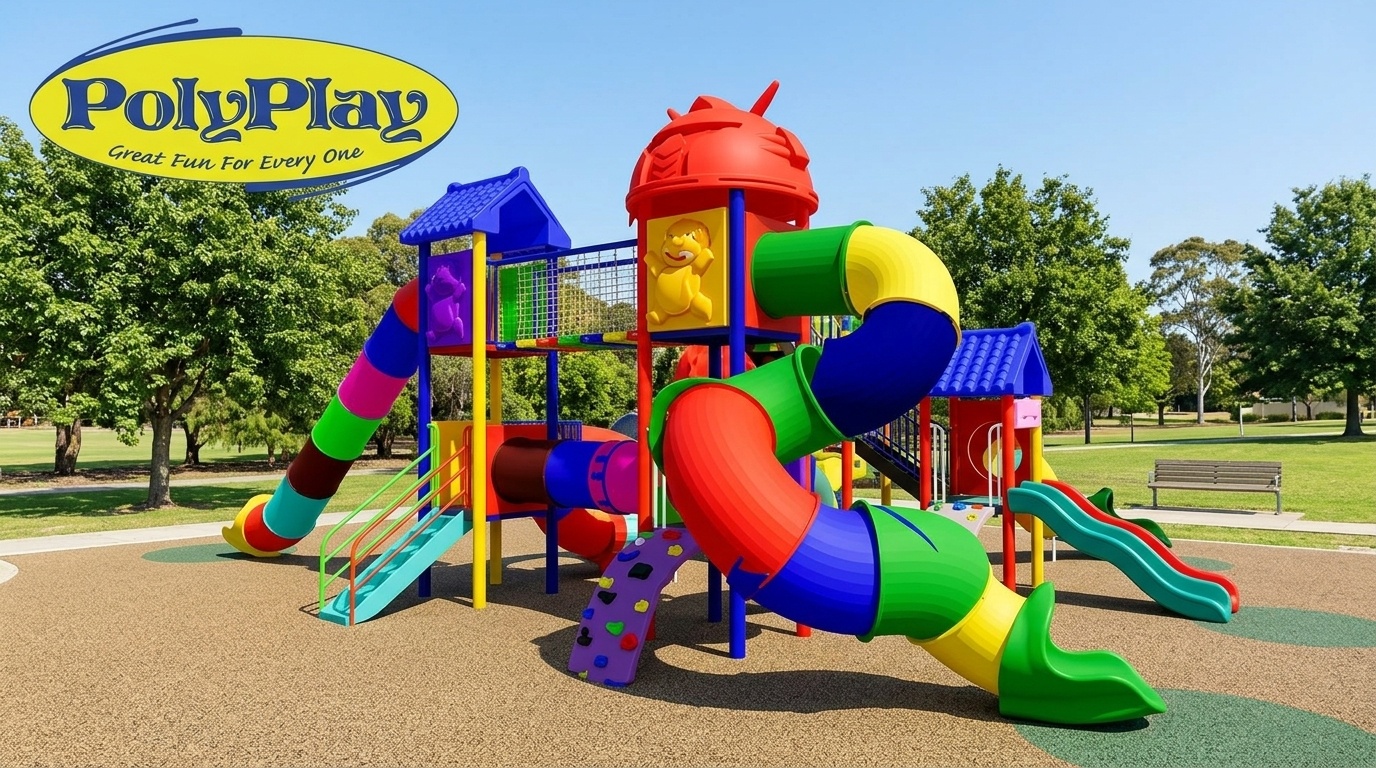
Polyplay’s commercial playground range is specified by age group, not just by size. That specificity is what makes the difference between equipment that serves a school well and equipment that gets cordoned off after the first inspection.
Affordable playground equipment in Kenya loses its value quickly if the installation is done without proper groundwork. Foundation depth, post anchoring, concrete mix, safety surfacing — these are not optional extras. They’re what keeps a structure safe and plumb after five rainy seasons.
Professional playground installation services include site assessment before anything is ordered. The slope of the ground, the soil type, the drainage pattern — all of it affects how the foundation is designed. A flat photograph of equipment tells you nothing about whether it’s appropriate for your specific site.
The EN 1176 playground safety standard covers installation requirements alongside equipment design. Any supplier offering playground installation services in Kenya should be working to this benchmark or clearly explaining what standard they follow instead.
Commercial playground equipment is a long-term asset. The schools, housing estates, and developers who get the most value from it are the ones who ask harder questions upfront — about materials, age suitability, installation, and after-sales support — rather than comparing headline prices alone.
If you’re at the planning stage, Polyplay works with sites across Kenya from initial consultation through to installation. It’s worth a conversation before the budget gets locked in.
Commercial equipment is engineered for high-frequency use by large groups of children over many years. It uses heavier steel profiles, UV-stabilised plastics, and corrosion-resistant fixings that consumer-grade equipment does not.
Costs vary based on structure size, age range, and site requirements. A basic early childhood unit costs considerably less than a full multi-tower system. The more useful question is the total cost over five years, including maintenance — commercial-grade equipment typically wins that comparison.
Yes. Polyplay handles supply, delivery, and professional installation for commercial playground projects across Kenya. Contact them through polyplay.co.ke for a site-specific assessment and quote.